
Setting up your first Dungeons & Dragons game can feel overwhelming. Rulebooks, character sheets, dice, maps, players, schedules-it looks like a lot because it is. The good news is that you do not need to master everything on day one. A solid first session only needs a clear structure, a simple story, and the right tools to support immersion.
This guide walks you through setting up your first D&D game step by step, whether you are playing in person or online.
Step 1: Choose the Right D&D Edition
For first-time players and Dungeon Masters, D&D 5th Edition (5E) is the safest choice. It has:
Clear, beginner-friendly rules
Massive online documentation and tutorials
Strong support across virtual tabletops
A large player base, making it easier to find help
Avoid homebrew systems or heavy modifications for your first game. Keep the rules vanilla until everyone understands the basics.
Step 2: Decide How You Will Play (In-Person or Online)
Before anything else, lock this decision.
In-person play requires:
A physical space
Printed or digital character sheets
Dice (or a dice app)
Basic maps or theater-of-the-mind narration
Online play requires:
A virtual tabletop (Roll20, Foundry, etc.)
Voice chat (Discord works fine)
Digital character sheets
A way to maintain immersion visually
Online play removes geography limits but increases the importance of visuals, presentation, and atmosphere. This is where many first-time games struggle—and where the right tools make a big difference.
Step 3: Assign Roles Clearly
You need two things:
One Dungeon Master (DM)
Two to five players
The DM does not need to be an expert. Their job is to:
Describe the world
Present challenges
Make fair rulings
Keep the game moving
Players only need to:
Understand their character
Engage with the story
Respect table rules
Set expectations early. Decide session length, tone (serious or light), and commitment level before the first roll.
Step 4: Create Characters Together
Do not let players show up with fully optimized characters from the internet.
For a first game:
Build characters together
Use official races and classes
Start at level 1
Focus on personality over power
This session—often called Session Zero—prevents confusion later and helps players understand how their abilities actually work in play.
Step 5: Start With a Simple Adventure
Avoid massive campaign books at the start.
A good first adventure:
Takes 2–4 hours
Has one clear objective
Includes one combat, one roleplay moment, and one decision point
Classic starter adventures or short homebrew quests work best. Complexity kills momentum in early sessions.
Step 6: Build Immersion Early
Immersion is what turns a rules session into a memorable game.
For online games especially, immersion depends on:
Visual presence
Character identity
Consistent atmosphere
This is where many first-time D&D games fall flat. Players feel disconnected from their characters, especially on webcam.
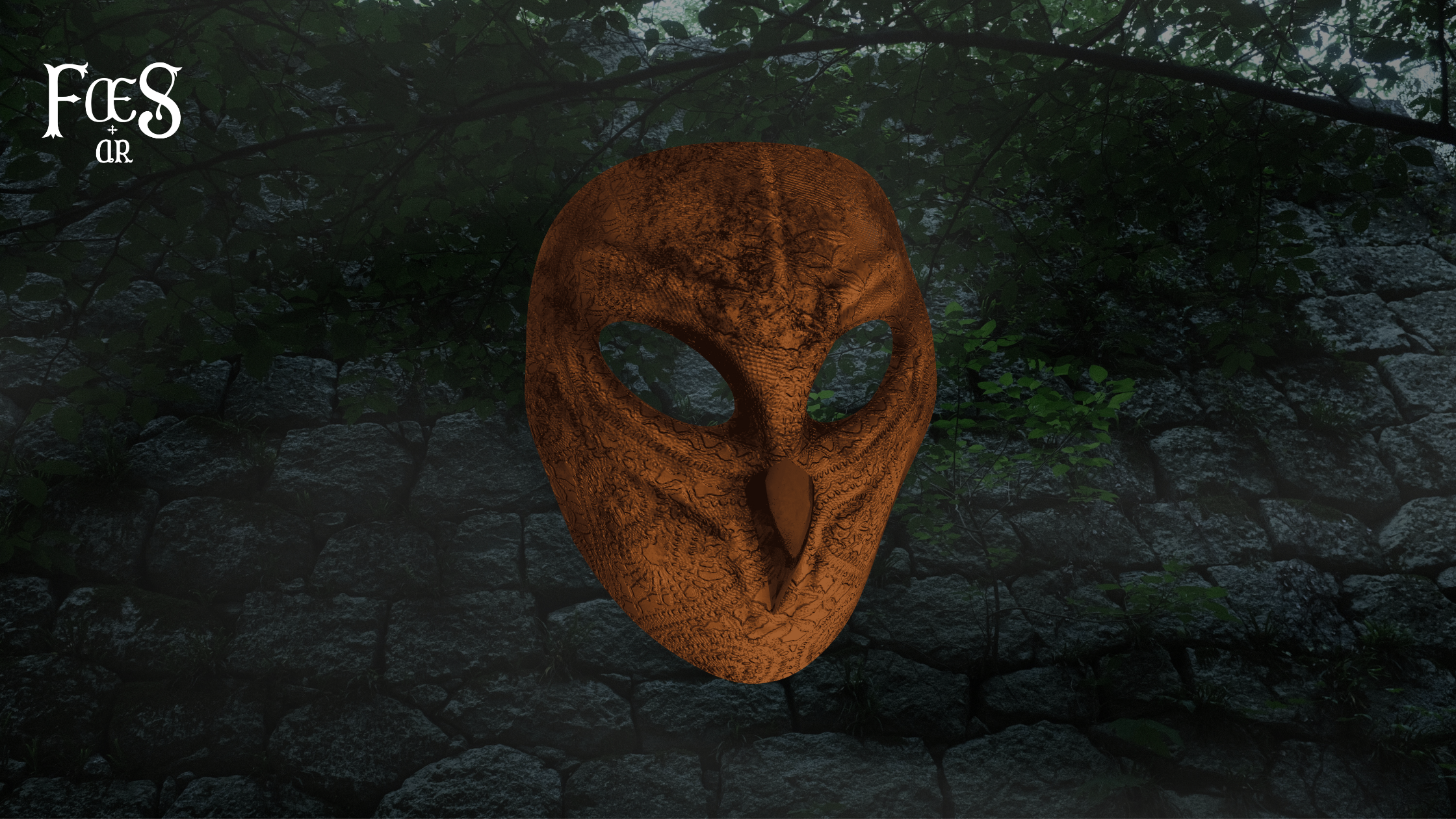
Faes AR solves this by letting players visually embody their characters in real time. Instead of just talking about a fantasy world, players appear as part of it—wearing masks, costumes, and character elements that match the game.
You can explore Faes AR here:https://www.faes.ar/
And access the full product here:https://gumroad.com/products/qyoqv
Step 7: Run the First Session Light and Flexible
Your first session does not need:
Perfect rules knowledge
Flawless combat flow
Deep lore
It needs:
Clear descriptions
Player agency
A sense of progress
If a rule slows the game down, make a ruling and move on. You can correct it later. Momentum matters more than precision.
Step 8: Get Feedback and Improve
After the session, ask three questions:
What was fun?
What was confusing?
What should we do more of next time?
Use this feedback to adjust pacing, difficulty, and presentation. Every strong campaign improves because the group adapts together.
Final Thoughts
Your first D&D game does not need to be perfect. It needs to be engaging, welcoming, and immersive enough that players want to come back.
Structure gives confidence. Simplicity builds momentum. Immersion creates memories.
If you are playing online and want your game to feel less like a video call and more like a shared fantasy experience, tools like Faes AR can dramatically raise the quality of your sessions.
Start simple. Play consistently. Improve every session.