
Online Dungeons and Dragons solves one problem and creates another. It makes it easy to gather players across cities and time zones, but it often strips away energy, presence, and emotional engagement. What should feel like a shared adventure can quickly turn into people waiting for their turn to talk on a video call.
Online D&D is not boring because of the medium. It becomes boring when immersion, pacing, and player agency are not deliberately designed.
This guide breaks down how to make online D&D engaging, memorable, and genuinely fun.
Fix the Pacing First
Slow pacing is the number one reason online games lose momentum.
As a DM, you should:
Cut unnecessary combat rounds
Skip trivial rolls
Move scenes forward with intent
If nothing meaningful happens in ten minutes, attention drops. Online play magnifies downtime. Keep scenes short, purposeful, and decisive.
Stop Over-Explaining
Long descriptions kill energy online faster than in person.
Use:
Short sensory details
Clear emotional cues
Focused descriptions tied to player actions
Instead of describing everything in the room, describe the one thing that matters right now. Let players ask questions if they want more detail.
Give Players More Agency, Not More Rules
Online D&D feels dull when players feel like passengers.
Make choices frequent and visible:
Present multiple paths forward
Let player decisions change outcomes
Allow creative solutions without hunting for perfect rules
When players feel their choices shape the session, engagement rises automatically.
Design Scenes for Roleplay, Not Just Mechanics
Many online games become combat simulators because combat feels easier to run digitally.
Actively design roleplay moments:
Conversations with meaningful consequences
Moral choices with no obvious answer
NPCs that respond emotionally, not mechanically
Roleplay keeps players mentally present even when they are not speaking.
Use Visual Identity to Restore Presence
One of the biggest problems with online D&D is disconnection. Players are voices, not characters.
Visual embodiment changes this entirely.
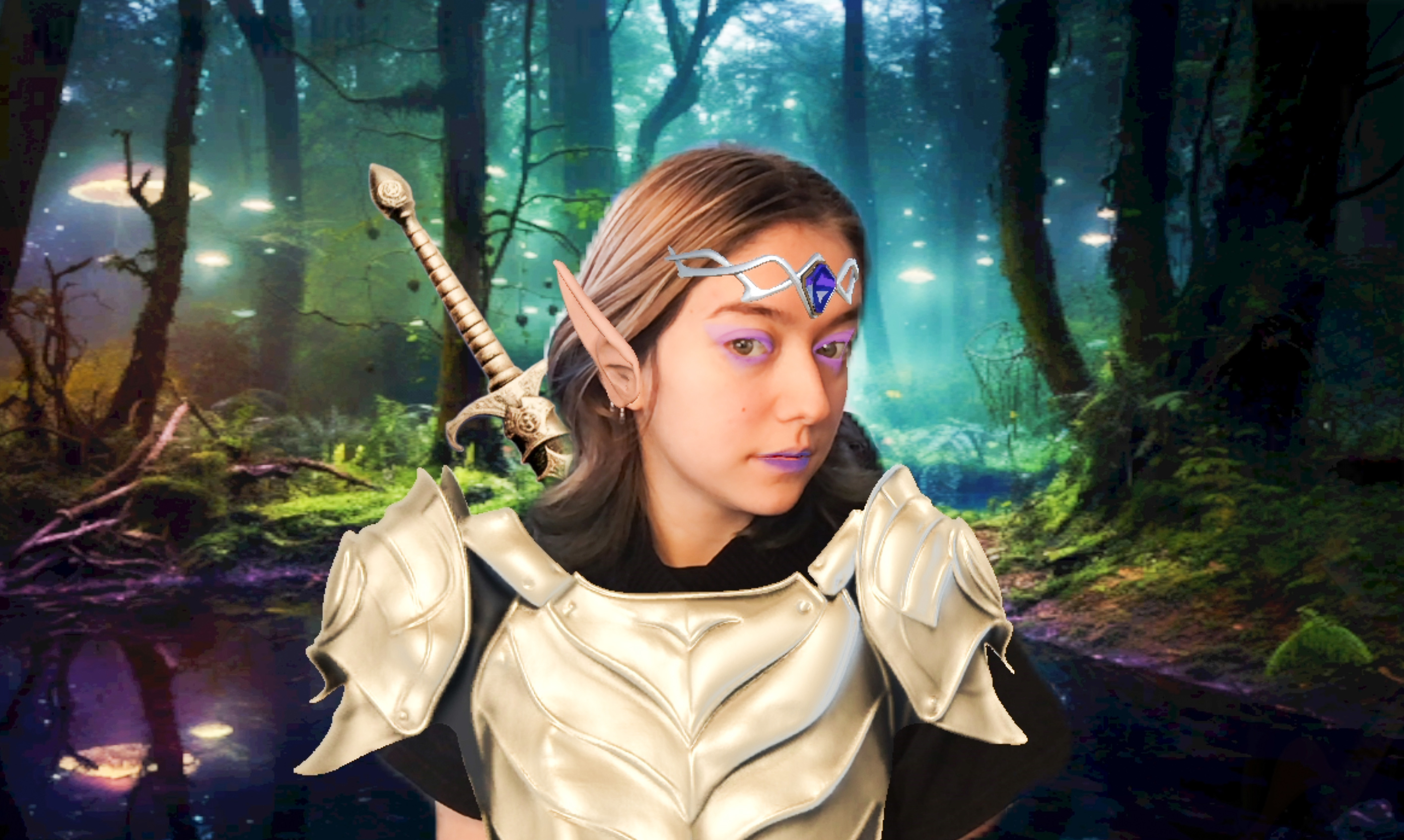
When players appear as their characters rather than generic webcams, posture, expression, and confidence shift. People stay in character longer and engage more naturally.
Faes AR enables this by letting players visually embody their characters in real time using fantasy masks, costumes, and character elements designed for roleplay. It helps online tables recover the sense of presence that remote play often lacks.
You can explore Faes AR here:https://www.faes.ar/
And access the full product here:https://gumroad.com/products/qyoqv
Reduce Distractions Ruthlessly
Online play competes with everything on a player’s screen.
Set clear expectations:
Cameras on when possible
Phones away during scenes
Breaks planned instead of drifting pauses
Structure protects attention. Do not rely on willpower alone.
End Sessions on a High Note
Never end a session because time ran out.
End sessions with:
A reveal
A decision point
A cliffhanger
Players remember how sessions end. Strong endings create anticipation instead of fatigue.
What Actually Makes Online D&D Work
Online D&D becomes boring when it tries to imitate in-person play without adapting. It becomes great when it leans into intentional pacing, strong roleplay design, and tools that restore immersion and presence.
Focus on momentum. Protect immersion. Give players identity and agency.
When players feel present in the world and connected to each other, online D&D stops feeling like a compromise and starts feeling like its own powerful format.