Even when you know your character well - their history, personality, goals - translating that into believable physical behavior during a session can feel awkward at first. Most of us default to our everyday posture and reactions, especially online, where the webcam limits how much of our body is visible. But movement is still one of the strongest tools you have for defining who your character is.
You don’t need to reinvent your entire mannerisms. Small, intentional choices can make a character feel distinct and alive.
Here’s how to bring those movements into your sessions without slipping into forced “acting.”
Start With How Your Character Holds Themselves
Posture communicates more than dialogue.
A character’s background, confidence, and habits shape the way they occupy space. Try anchoring their physical presence with one simple question:
“How much room do they take up - more, less, or exactly what they need?”
You don’t need exaggerated poses - just a consistent baseline.
Use Micro-Gestures Instead of Big Movements
Large theatrical gestures don’t read well online and can feel out of place. Micro-gestures, however, translate perfectly through a webcam:
Fingers tapping when nervous
Rubbing a thumb over a ring or pendant
A slow exhale before tough decisions
A head tilt when lying or deflecting
These tiny actions quietly build identity without breaking immersion.
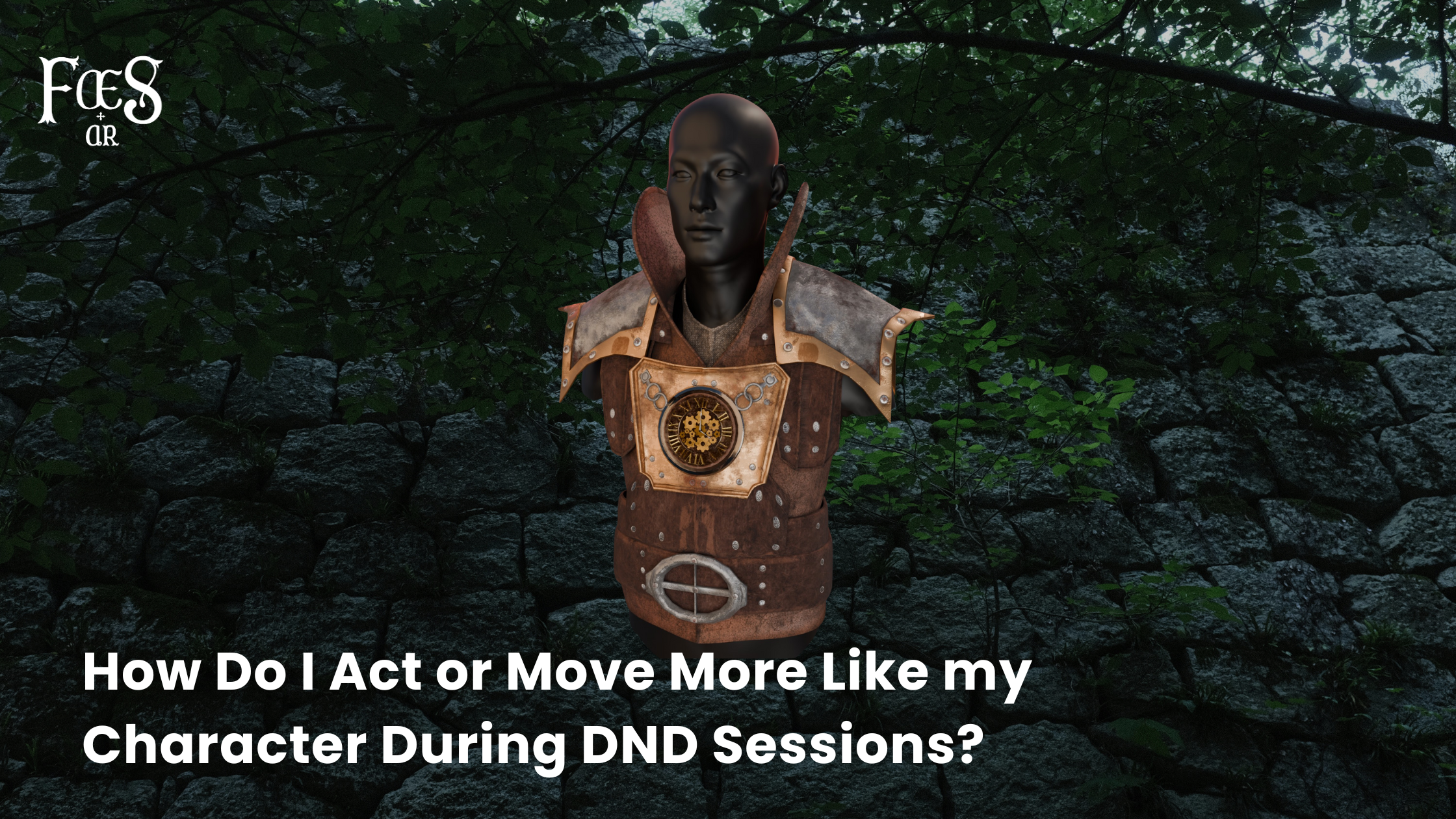
If you’re using Faes AR, these micro-gestures become even more expressive because the visual overlay picks them up and mirrors them through your character’s appearance.
Let Emotional States Shift Your Presence
Characters rarely move the same way in every scene. You can add depth by adjusting your posture and gestures based on the situation:
During danger, sit more still, as if holding your breath.
During curiosity, let your head follow sounds or descriptions.
During frustration, let your jaw tense or your shoulders tighten.
During joy, relax your posture or brighten your expression.
These shifts don’t need to be dramatic. The camera amplifies small changes.
Use the Camera Deliberately
Think of the webcam as part of the scene rather than a recording device.Where you look affects how your character feels to others.
Try experimenting with:
Looking slightly below the lens when uncertain
Direct eye contact when being honest or direct
A brief glance away when hiding something
Leaning closer when the stakes rise
These directional choices help players read your intent, even if you say nothing.
Reflect the Character Back at Yourself
This is one of the reasons many players feel more physically “in character” when using Faes AR. Seeing the character’s clothing, features, or effects react to your movements creates immediate feedback. You naturally begin moving in ways that align with how the character looks - not because you’re trying to, but because your brain responds to the reflection.
It’s a form of guided embodiment that doesn’t require effort.
If you want to explore the philosophy behind that design, the team shares more here:About Faes
You can browse the character overlays or test setups through the Faes AR Portal or purchase the app at store.faes.ar.
Let the Character Build Over Time
The biggest myth in roleplay is that you need to “get it right” from the first session. Movement habits develop naturally the more you play. Instead of forcing a performance, focus on choosing one or two consistent traits. Let the rest emerge gradually from how the character reacts to situations.
A believable character isn’t defined by perfect acting - it’s defined by consistency and intention.
If you choose a posture, a pace, and one or two physical tells, you’re already ahead of most players when it comes to embodied roleplay.
And over time, those habits become second nature.