Dungeons and Dragons can be played around a physical table or through a screen. New players often assume these are fundamentally different experiences. They are different, but not in the ways most people expect.
Understanding what actually changes and what stays the same helps groups choose the right format and avoid common frustrations.
What Does Not Change at All
The Core Game Loop: Whether in person or online, D&D follows the same structure:
The Dungeon Master describes a situation
Players describe what their characters do
Dice are rolled when outcomes are uncertain
The story moves forward based on results
The medium does not change how the game fundamentally works.
Player Agency: Choices still matter the same way.
Good decisions, creative thinking, and character-driven actions have impact in both formats. Online play does not reduce agency unless the game design does.
The Role of the Dungeon Master: The DM’s responsibilities stay the same:
Present situations
Respond to player choices
Maintain pacing
Keep the world consistent
Tools may change, but the role does not.
Rules and Mechanics: D&D rules do not change online.
Combat, roleplay, exploration, and checks function identically. Online tools may automate parts of the system, but they do not alter how the rules work.
What Actually Changes
Physical PresenceIn-person games benefit from shared physical space. Body language, eye contact, and table energy help conversations flow naturally.
Online games lose these cues, which can make turn-taking and roleplay feel less intuitive if not addressed intentionally.
Pacing Sensitivity: Online sessions are less forgiving of downtime.
Long combats, extended rules discussions, or unclear scenes feel heavier online. Tight pacing matters more when players are sitting behind screens.
Distractions: In-person play naturally limits distractions.
Online play competes with notifications, browsers, and daily life. Structure and engagement become more important to protect attention.
Visual Identity: In-person games often include miniatures, maps, notebooks, and physical character sheets. These reinforce identity and presence.
Online games risk reducing players to voices and usernames unless visual identity is restored intentionally.
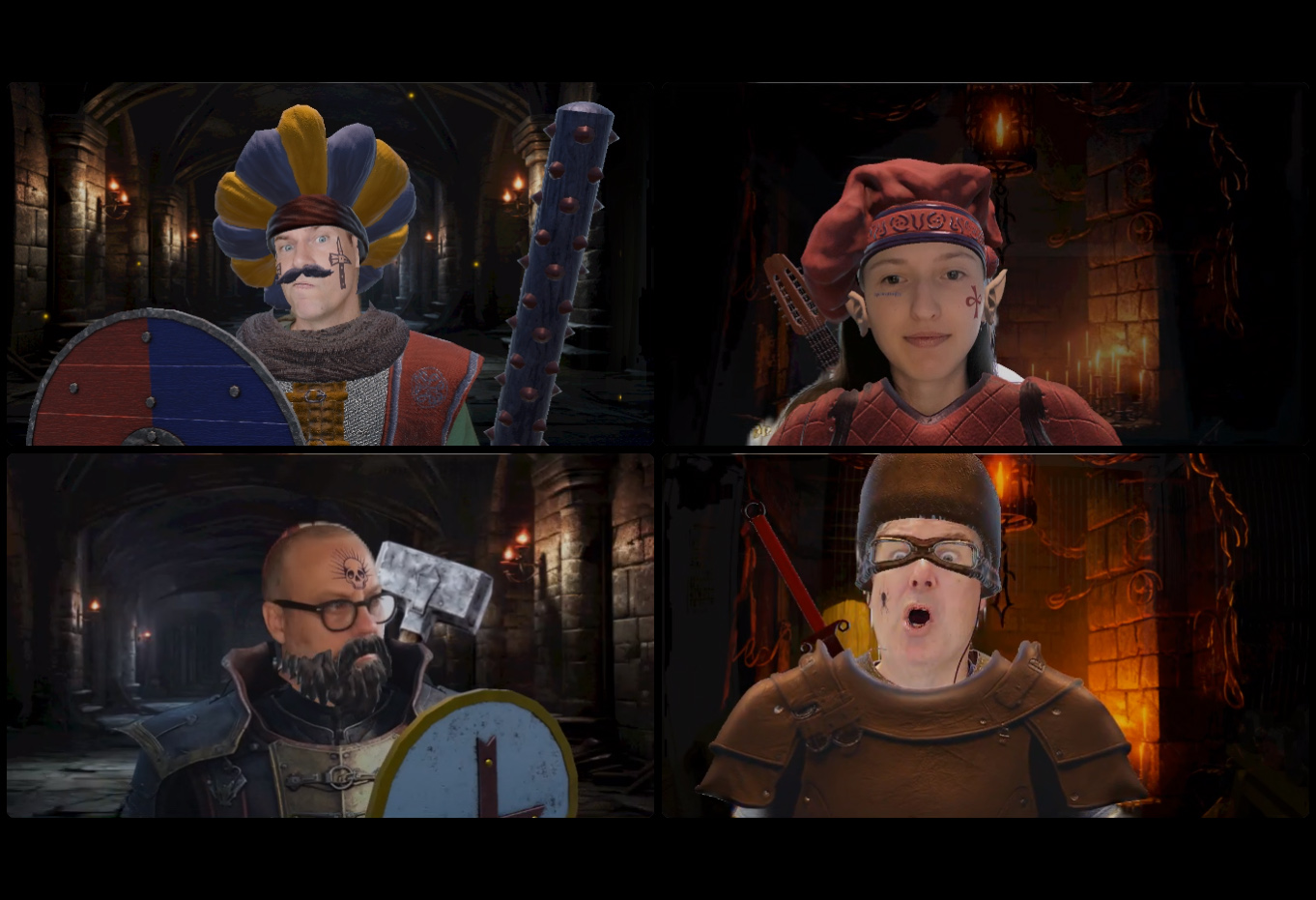
Faes AR helps address this by allowing players to visually embody their characters in real time using fantasy masks and character elements. This helps online groups regain a sense of presence and character identity that is often lost in remote play.
You can explore Faes AR here:https://www.faes.ar/
And access the full product here:https://gumroad.com/products/qyoqv
Setup and Accessibility: Online D&D is easier to schedule across locations and time zones. In-person games benefit from stronger social momentum but require shared availability and space.
Neither is objectively better. They serve different needs.
What Causes Problems in Each Format
In-person games struggle when:
Scheduling becomes inconsistent
Groups grow too large
Sessions run too long
Online games struggle when:
Pacing is slow
Engagement is passive
Presence and identity are ignored
These issues come from design choices, not the format itself.
Choosing the Right Format for Your Group
The best format depends on:
Player availability
Desired session length
Comfort with technology
Importance of physical presence
Many long-running campaigns succeed online. Many fail in person. Format alone does not determine success.
What Actually Matters Most
D&D works when players feel:
Comfortable participating
Invested in their characters
Connected to the group
Those elements can exist in both formats. The difference is how intentionally they are supported.
In-person and online D&D are not opposites. They are variations of the same experience. When groups understand what truly changes and design around it, both formats can deliver memorable and immersive games.