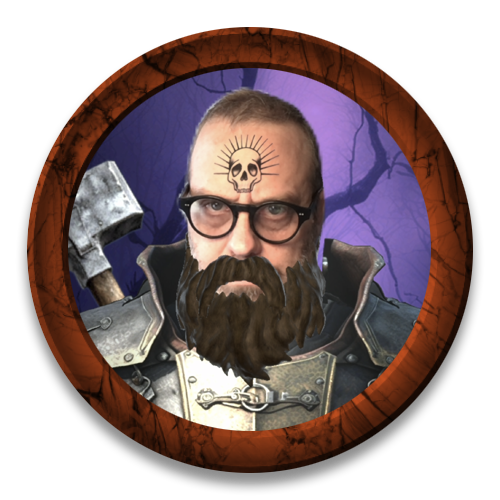
We're gamers and sci-fi readers who wanted to build worlds and show up in them. Every week, Game Masters and players run campaigns over Discord and Zoom with a plain webcam square, or the camera off. Faes AR lets them build a cast of characters and NPCs, save them, and bring them to the table on camera.
Online TTRPG is the most demanding live performance use case for webcam identity we know of. Game Masters hold narrative authority for hours at a time and voice a whole cast of characters and NPCs.
The team comes from the gaming community. Games like Fortnite and World of Warcraft give players tools to customize how their avatars look. The same tools did not exist on a live webcam for a GM running a four-hour campaign on Discord. Faes AR adds that layer: a visual identity you build, save, and bring back each session, set by you, not generated by an algorithm.
GMs and players consulted
Including ~70 Game Master interviews. The product is built on what they told us about running and joining sessions online. While online TTRPG tooling has advanced significantly in areas like maps, audio, and virtual tabletops, the video and visual identity layer remains largely untouched, and GMs consistently described it as a weak point.
A direct path from artists to TTRPG players and GMs. Human-made assets, sold by the people who made them, to the community that values them.
Faes AR does not use, sell, or generate AI art. Every asset in the library is hand-crafted by human artists. This is not a temporary stance. It is how the content economy of the platform is designed to work.
In our research report, about 60% of the GMs and players we spoke to were opposed to AI-generated art. That number reflects a community that values craft, authorship, and the relationship between players and the artists who create for their games. We share that position.
A note on our history: the earliest alpha of Faes AR used AI-generated placeholder art. Its only job was to find out whether GMs and players wanted AR at the table at all. They did, and they were just as clear that they didn't want AI art in their games. We removed every AI asset from the app and rebuilt the library with human artists. Some early social posts featuring AI assets may still be online; they predate this decision.
A small team protecting how we appear online.
ARaura Augmented Reality Fashion Corp., founded in Montreal in 2020. Two co-founders. A few contract collaborators support them across community, marketing, and asset production.
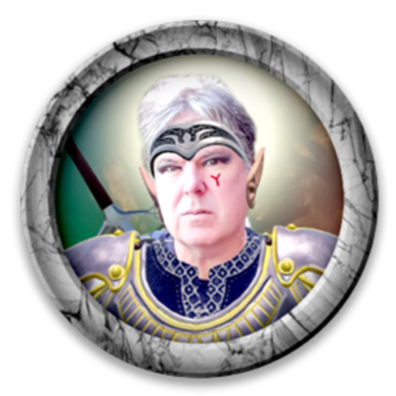
We all want to show up differently, and AR will let people do that anywhere a camera or headset can see. That freedom will bring abuse with it. So every participant needs a say: the person showing something, the person viewing it, the asset itself, and the space it appears in. Each decides what renders, and for whom.
ARaura's augmented reality technology is protected by granted patents in the United States (US 12,148,065 B2) and Canada (CA 3,175,663 C). A continuation-in-part covering shared, rules-governed spaces, US Application No. 18/819,259, has been allowed by the USPTO and is awaiting issuance.
$50 one-time · Hundreds of hand-crafted assets · No subscription