
Creating a distinctive fantasy culture is less about inventing something wildly original and more about making choices that feel intentional and lived-in. Most forgettable fantasy cultures are just a grab bag of cool ideas. The memorable ones feel like they could exist even if the story was not happening.
Start with a simple question: how do these people survive?
Everything flows from that. Climate, geography, and available resources quietly shape culture long before religion or politics show up. A desert culture will value water, shade, and endurance. A mountain society might prioritize cooperation, careful planning, and respect for elders who know the land. If survival is easy, culture gets decorative. If survival is hard, culture gets practical.
Once you know how they live, think about what they value.
Values are the backbone of culture. What earns respect? Strength, wisdom, generosity, loyalty, cunning, restraint? Pick two or three and lean into them. Avoid trying to cover everything. Cultures feel fake when they conveniently value whatever the plot needs at the moment. Real cultures have blind spots and contradictions. A society that prizes honor might struggle with espionage. One that values freedom might lack long-term stability.
Now ask how those values show up in everyday life.
Culture is not speeches and ceremonies. It is habits. How people greet each other. How they argue. Who speaks first in a room. What behavior is considered rude without anyone explaining why. These small details do most of the heavy lifting. A single custom like refusing to eat until elders are served can say more than three pages of lore.
Language helps here, even if you do not invent a full one.
You do not need complex conlangs. You need patterns. Maybe they swear using weather terms instead of gods. Maybe compliments are indirect and insults are polite on the surface. Think about metaphors they would naturally use. A sea culture compares everything to tides. A nomadic culture talks about journeys, not destinations. This makes dialogue feel grounded without overwhelming the reader or player.
Rituals matter, but only when they connect to something real.
Festivals, rites of passage, and taboos should exist for a reason. Coming-of-age ceremonies might exist because survival requires trust in young adults. Mourning rituals may focus on practicality if death is common, or be elaborate if it is rare and shocking. Ask what problem the ritual originally solved. That keeps it from feeling decorative.
Clothing and appearance are often treated as aesthetics first. Flip that.
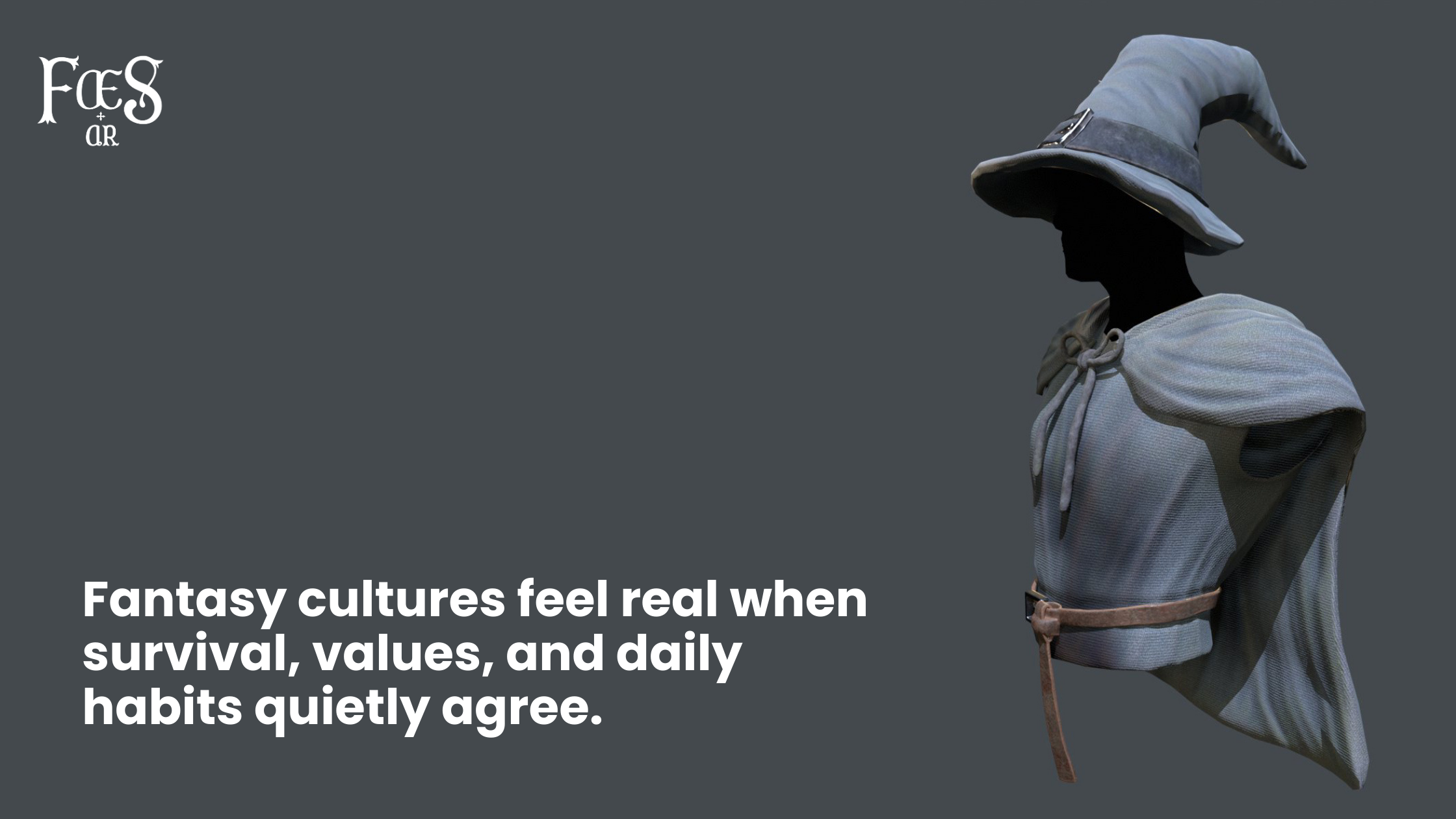
What people wear should make sense before it looks cool. Materials reflect environment and technology. Decoration reflects values. A culture that values lineage might wear symbols of ancestry. One that values achievement might display earned marks. This is where tools like Faes AR can help you experiment visually. Seeing your character move and exist inside their cultural look often reveals inconsistencies you would miss on paper. Something that looks great in your head may feel wrong once you see it in motion.
History does not need to be long, but it needs scars.
Every culture has moments it does not like to talk about. Lost wars, internal schisms, abandoned gods, broken treaties. You do not need to explain them fully. Just let their existence influence behavior. Suspicion toward outsiders often comes from one bad experience that never healed. Traditions sometimes exist because something went very wrong once.
Finally, remember that cultures are not monoliths.
There will be disagreements, subcultures, and generational tension. Elders complain about youth. Youth challenge tradition. Border regions blend customs. This friction makes the culture feel alive. Perfect unity feels artificial.
If you ever feel stuck, stop worldbuilding and roleplay for a moment. Put yourself in a character’s place and walk through an ordinary day. What annoys them. What comforts them. What rules do they follow without thinking. Culture reveals itself fastest when you stop trying to design it and start living in it.
A distinctive fantasy culture does not need to be loud or complex. It needs to feel consistent, constrained, and human. That is what makes people remember it long after the spell effects and epic battles fade.