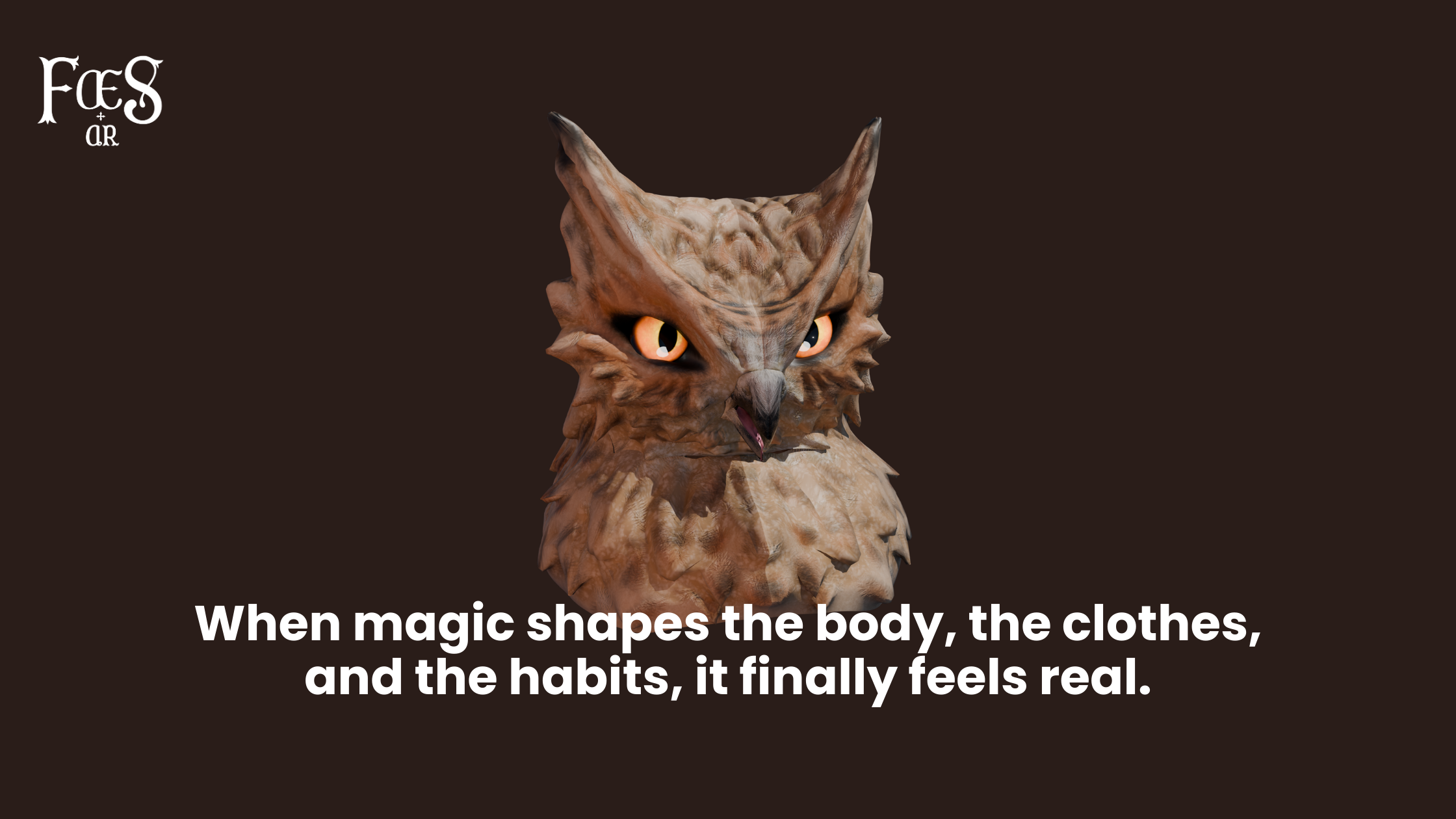
If magic exists in a world, it should leave marks. Not just on the plot, but on people. A magic system that does not influence how characters look, move, or present themselves usually feels disconnected from the world it is supposed to shape.
The key is to stop treating magic as an abstract mechanic and start treating it like a force that affects bodies, habits, and culture over time.
Start by asking how magic is accessed.
Is magic learned, inherited, borrowed, stolen, or imposed? Each option changes how characters look. Learned magic often creates visible discipline. Clean tools, repeated symbols, standardized garments. Inherited magic tends to show up as physical traits, markings, or features that cannot be removed. Borrowed or stolen magic usually looks unstable, mismatched, or patched together.
If magic requires effort, the body adapts. If it costs something, the cost should be visible.
Define what magic does to the user over time.
Magic should have side effects, even subtle ones. Heat magic might leave burn scars, callused hands, or a preference for lighter clothing. Illusion magic might affect posture, eye contact, or facial expression. Healing magic could leave users physically drained or prematurely aged. The longer someone uses magic, the more their appearance should drift from the baseline.
This creates instant visual storytelling. You can often tell who a character is before they speak.
Decide whether magic is hidden or embraced.
In some worlds, magic users want to blend in. That leads to concealment. Covered skin, muted colors, deliberate plainness. In others, magic is status. That leads to exaggeration. Bold colors, visible symbols, ritual wear, exposed markings. Neither choice is better, but you should commit to one direction culturally, even if individual characters rebel against it.
Ask what happens when magic is illegal, rare, or feared.
Restriction shapes aesthetics fast. Prohibited magic creates secret signals, coded clothing choices, discreet accessories, or easily removable markers. Rare magic leads to reverence and careful presentation. Feared magic often produces visual distance. Masks, veils, gloves, or symbols meant to reassure non-users.
These choices make magic feel integrated instead of conveniently invisible.
Tie magic aesthetics to function, not fashion.
Avoid designing magic looks purely for style. Ask what problem the design solves. Robes exist because they allow movement and conceal components. Gloves protect hands that channel volatile forces. Jewelry stores power or acts as a focus. When designs have reasons, they stop feeling like costumes and start feeling believable.
This also prevents all magic users from looking the same.
Let different schools or styles of magic drift apart visually.
Even within one system, variation matters. A scholar mage and a battlefield caster should not look identical. One values precision and control. The other values speed and protection. Their silhouettes, gear, and wear patterns should reflect that. Over time, these differences form recognizable visual subcultures inside the magic system.
This is where actually seeing the designs matters.
When you test magic aesthetics in motion, flaws show up quickly. Something that sounds logical can look awkward or inconsistent once worn. Tools like Faes AR help here because you can experiment with magic-infused outfits, markings, and accessories live instead of guessing. Seeing how magical elements sit on a real moving body often reveals whether they feel earned or decorative. https://faes.ar/
Decide what magic changes permanently.
Temporary effects are common, but permanent ones create stronger identity. Stains that never fade. Hair that changes color. Eyes that reflect energy. Bone structure altered by repeated use. These changes turn magic into something that cannot be turned off, which raises the emotional and social stakes for characters.
People react differently to permanent change, and that reaction becomes part of the aesthetic.
Think about how non-users respond.
Magic aesthetics do not exist in isolation. How ordinary people treat magic users influences how those users present themselves. Pride, shame, fear, defiance, indifference. All of these show up visually. A respected magic class stands tall. A persecuted one keeps its head down or overcompensates with intimidation.
These reactions make the world feel responsive.
Finally, test for consistency.
If you saw three characters using the same type of magic, would you believe they came from the same system? If the answer is no, tighten the rules. Reduce visual noise. Reinforce shared traits. Then allow individual expression on top of that structure.
A magic system influences aesthetics when it feels unavoidable. When magic leaves traces on bodies, clothing, posture, and culture, characters stop looking like people who happen to cast spells and start looking like people shaped by power.
If you want to experiment with how magical effects, markings, and outfits actually look on a character instead of imagining them, tools like Faes AR can help you test those ideas visually before locking them into lore or art.https://faes.ar/